Reflections on Widowhood Series: Exploring the Many Rooms of Life After Loss
Widowhood does not look the same for everyone. A person who loses a spouse while raising children will experience widowhood differently than someone whose children are grown or no longer living at home. Someone who loses a spouse in the middle of their working years may face different challenges than someone who loses a spouse after decades of building a life together. Each experience carries its own losses, responsibilities, and adjustments.
There is no single way to experience widowhood. These reflections come from the perspective of a younger senior navigating life after the loss of a spouse after years of building a shared life together. Yet many of the emotions, questions, and changes that come with widowhood are shared by surviving spouses in many different circumstances.
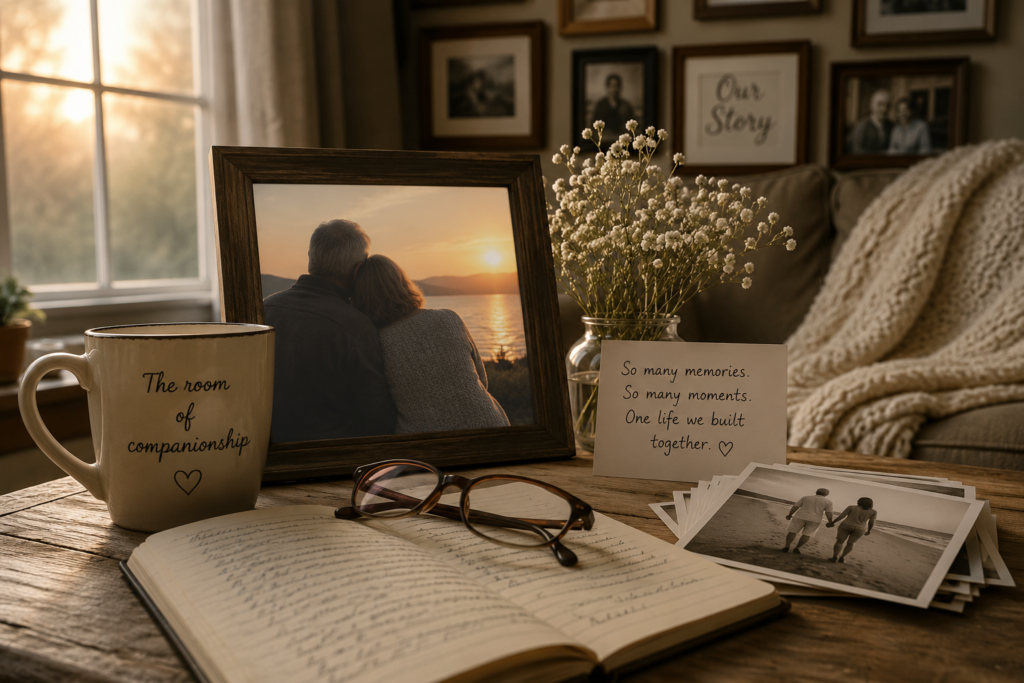
Widowhood is often thought of as grief – the sadness of losing someone you love. Grief is certainly part of widowhood, but it is only one room in a much larger house. Widowhood also includes the loss of companionship, changes in identity, decisions that must now be made alone, responsibilities that shift, quiet moments that feel different, and the process of learning how to live a life that was once shared.
When a spouse passes away, the world continues moving forward. This is not meant as a criticism of anyone. It is simply one of the first realities a surviving spouse begins to understand. Family members and friends continue living their own lives. Children, siblings, and friends may all grieve the loss in their own ways while also returning to the responsibilities and routines of their lives. Their relationship with the person who died mattered, and their absence is felt.
For the surviving spouse, however, life has been fundamentally changed.
The death of a spouse is not only the loss of a person. It is the loss of a partnership, a shared life, and the daily presence of the person who was woven into nearly every part of life. A spouse is often the person who shares the ordinary moments that make up a life together. They are the person who listens after a difficult day, shares meals, discusses finances, makes plans, travels, celebrates milestones, dreams about the future, and shares the quiet beginning and ending of each day. They are the person beside you when you fall asleep and the person you see when you wake up.
They are the person who knows the routines, the preferences, the stories, and the small details that make a life feel familiar. When that person is gone, the surviving spouse loses more than companionship. They lose the person who was their daily partner in navigating life.
The loss is often found in the smallest moments. There are no more conversations from across the room, no familiar voice asking about the day, no goodnight kisses, no comforting hugs, and no simple requests such as, “Would you get me a glass of water?” Those moments may have seemed ordinary when they were happening, but they were part of the rhythm of a shared life.
After a spouse dies, the surviving spouse does not only miss the major events and milestones. They miss the everyday companionship that made ordinary moments meaningful.
One of the less visible realities of widowhood is that the surviving spouse changes as well. The loss is not only that life circumstances are different; the person themselves is different. Marriage shapes who people become. A spouse becomes accustomed to making decisions with another person, considering another person’s thoughts, sharing responsibilities, and building a future together. Over time, two individual lives become deeply connected.
The surviving spouse is still the same person, but they are no longer exactly who they were before the loss. They are learning how to live as an individual after years of being part of a “we.”
That transition can be difficult to recognize. The surviving spouse may find themselves asking questions they never expected to ask: Who am I now? What does my future look like? How do I make decisions when there is no longer someone beside me to discuss them with?
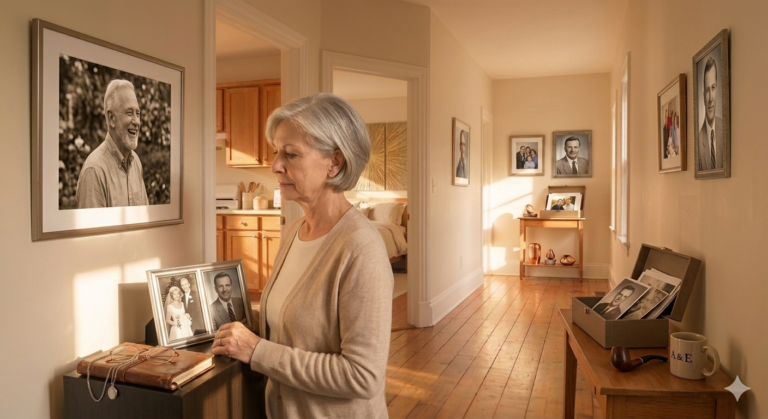
Widowhood often requires making countless decisions alone. Some decisions are practical. Do you stay in the home where so many memories were created, or do you move? Do you keep furniture that was chosen for two people but no longer fits a one-person household? What belongings should remain, and what belongings are too painful or difficult to keep?
Other decisions involve responsibilities that were once shared. Household tasks that were divided between two people now belong to one. Repairs, maintenance, finances, and planning may require learning new skills or finding outside help for things a spouse once handled.
Even ordinary activities can feel different. For some surviving spouses, it may be going to church alone, shopping alone, eating meals alone, or returning home to a quiet house. For others, loneliness may appear differently. It may be found in parenting decisions made without a partner, holidays that feel changed, or moments when there is no one else who understands the loss in quite the same way. The experience is different for each person, but the common thread is that life has changed.
One of the hardest parts of widowhood is that the world around the surviving spouse continues moving forward while their own world has been completely altered. Friends and family may continue to offer love and support, but their lives continue with their own routines, relationships, and responsibilities. They return home to their own families. They make plans. They share the ordinary moments that the surviving spouse no longer has.
That difference can create a loneliness that is difficult to explain.
Many surviving spouses struggle with wanting connection while not wanting to become a burden. They may hesitate before reaching out. They may wonder whether others are tired of hearing about their loss. They may try to appear stronger than they feel because they do not want others to worry.
Yet connection remains important. The surviving spouse does not need someone to replace the person they lost. No one can do that. What they need is understanding, friendship, conversation, and people who recognize that their lives have changed.
Widowhood is not simply learning to live without a spouse. It is learning to live in a world that looks familiar but feels completely different. The surviving spouse carries memories of the life they shared while also trying to understand the life that remains. They are not the same person they were before the loss because love changes people, and loss changes people too.
The world continues moving forward. The surviving spouse moves forward as well, carrying both the love that was shared and the reality of what has been lost. Widowhood is not about forgetting the life that existed before. It is about learning how to live with a heart, a home, and a future that have all been changed.
Widowhood has many rooms. Some rooms hold sorrow. Some hold memories. Some hold uncertainty. Some eventually hold growth and new understanding. Every surviving spouse walks through those rooms in their own way.