
Yes, that is true for all of us. Most children will become responsible adults and self-dependent. Some may even help or look after their aging parents.
Back in the 1990s and early 2000s, when I was involved in advocacy for Home and Community-Based Services (HCBS), which help people with disabilities receive the support they need while living in their communities, one of the things I often said was, “When our children (with developmental disabilities) age, so do we.” While I do not consider myself old, I am oldER, and I consider myself a young senior.
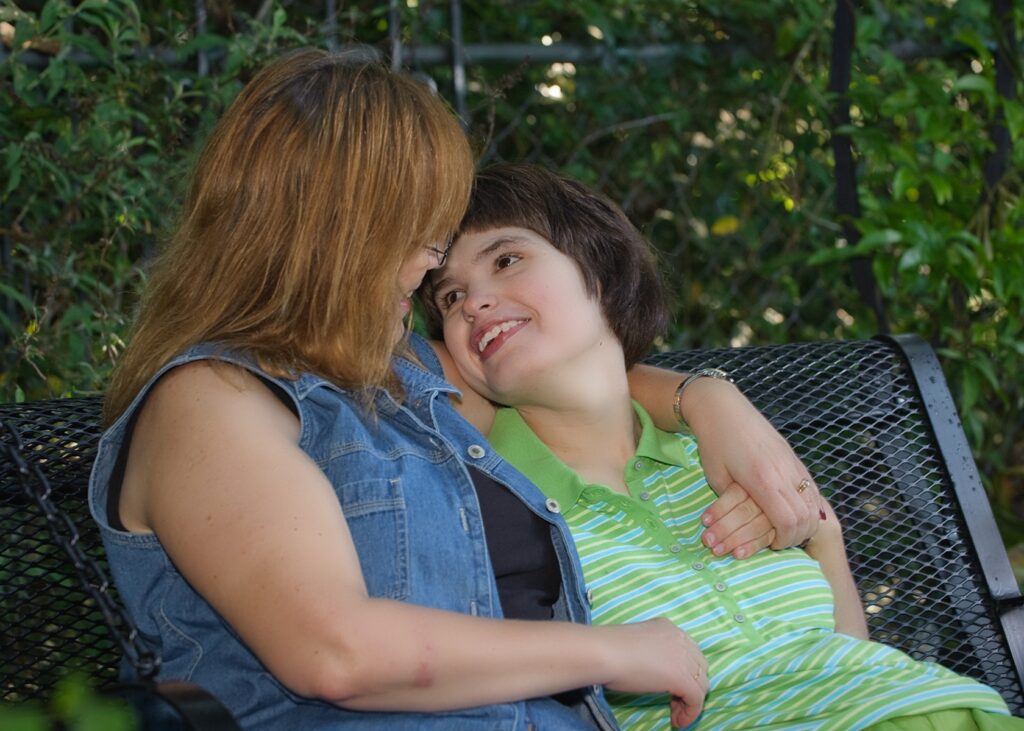
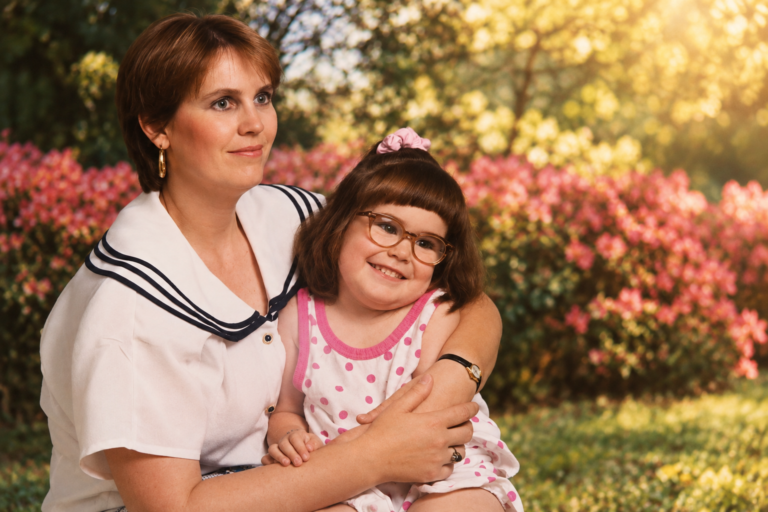
From my perspective, advocating for HCBS was in part to help ensure not only that Alison’s—my daughter, who has significant intellectual and physical disabilities—and our family’s needs for support were met at the time, but also to help have something in place for Alison as she got older, as Danny (her father) and I got older, and, well, for when we are no longer here. My late husband, Larry, was also a part of helping get things done for Alison.
She loves living in a home of her own, away from her parents, with the support she needs, and although she is unable to speak, she certainly seems to enjoy having a home of her own. It gives her some independence, although she cannot ever live without total support.
There were times when I (and Larry) went to visit her, and she would shoo us out. Why? Because she wanted to be fed, and we would be in the way of the DSW (Direct Support Worker) feeding her. I still laugh when I remember Larry getting Alison out of the kitchen and out of the way of the DSW who was preparing her food. He got her to sit down, and she kept waving for him to leave. After waving at him multiple times, she stood up, took his hand and walked him to the door (she can walk unsteadily for short distances), then waved for him to leave. LOL. Do not ever get in her way when it is time to eat. 🙂
When things do not go as planned or as they should, and that happens, accepting less—less accountability, less support, etc.—lessens what Alison (and others with intellectual and physical disabilities) need and require to live and, hopefully, thrive.
In Alison’s case, I believe she has thrived. Not in the same ways my sons or other people’s children have, but she has thrived. I believe she has thrived because we have not turned our backs on her and, in part, because we have made sure she is part of her community.
She is loved, she is needed, and she needs a lot of support. As her parents age, supports outside of the family become even more crucial for her.
Being a realist, I know things happen, however accepting less for her is not an option. Sometimes it may require taking three steps back to take one step forward.
Will Alison be able to help us as we grow older? No. But we will help to ensure that as we grow older, she continues to have what she needs as she grows older.
To be pro-life, to me, means being pro-life from conception to the grave.