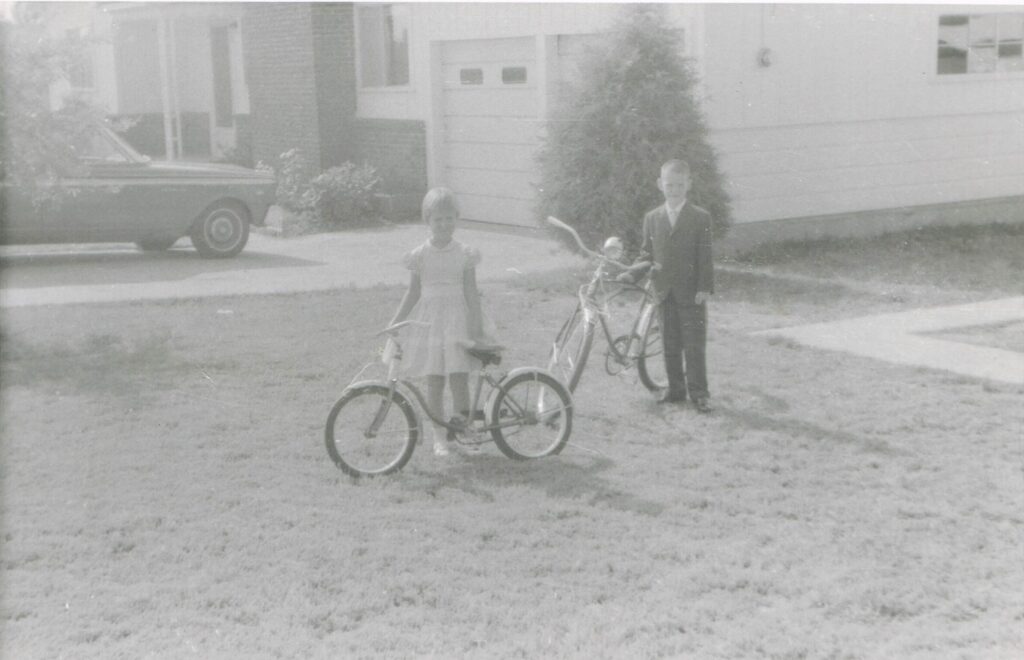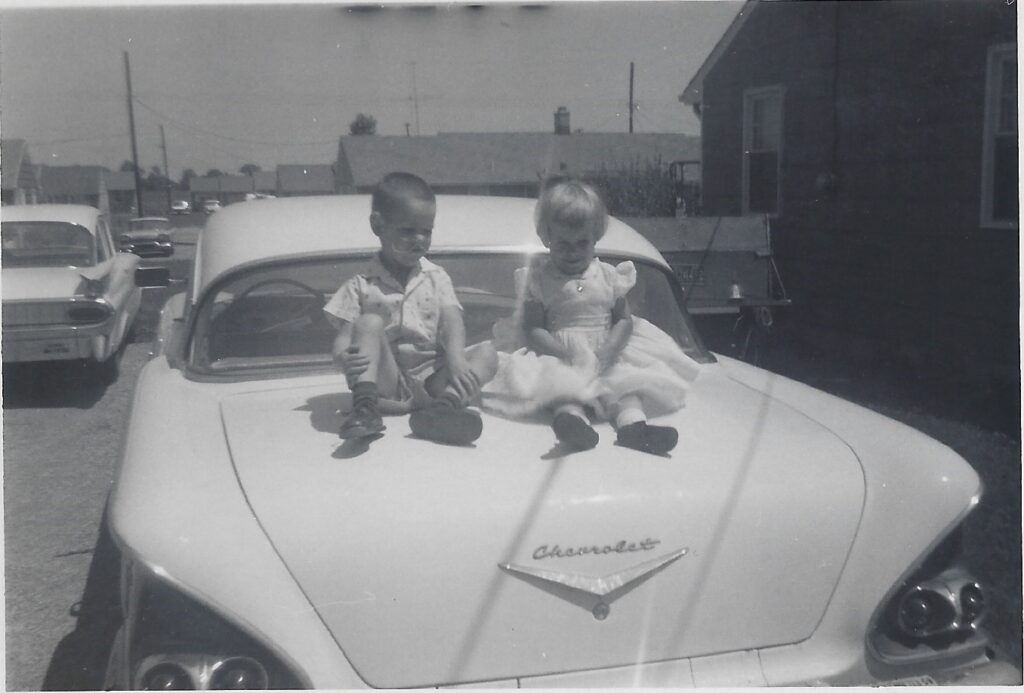

Giessen, Germany, circa 1966
Some memories stay with you, even when you do not expect them to.
There are places where things feel different, even when you do not yet understand why.
As a child, I found myself in some of those places.
We were living in Giessen, Germany at the time, and my family visited several American military cemeteries in Europe. I did not fully understand where we were or why we were there. I only knew that everything felt different when we arrived.
The air seemed still. Voices softened without being asked. Even as a child, you knew it was not a place for running or laughter, though no one had to say it.
We visited several cemeteries during those years, including the Henri-Chapelle American Cemetery, the Netherlands American Cemetery, and the Normandy American Cemetery.
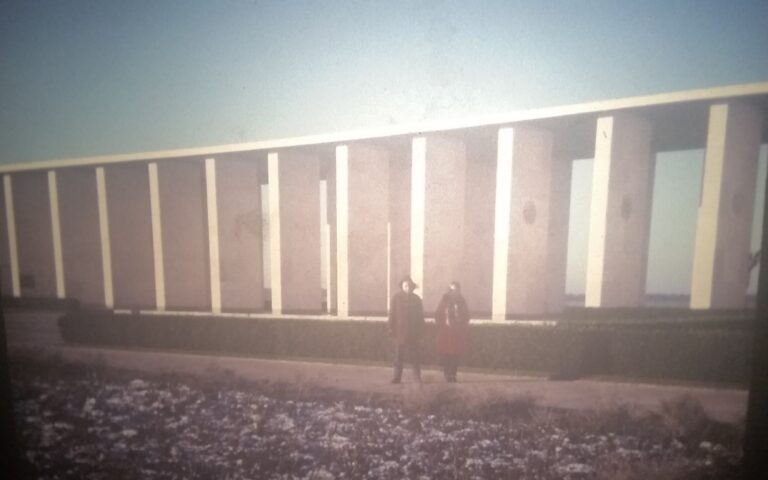
At Henri-Chapelle, my brother and I stand in front of one of the long buildings on the grounds. We look small against everything around us.
I was about eight years old. I remember the coat I was wearing. It was red, with a faux fur collar. It is a small detail, but it is one I have never forgotten.
As a child, I remember what I could see more than what I could understand. The rows of white crosses. The occasional Star of David. Everything was carefully kept, as though time had slowed down in those places.
What I remember most is the quiet.
Not the absence of sound, but a different kind of silence. One that felt important.
At the Netherlands American Cemetery, there was a reason we were there.
My mother had been searching for a name. At each cemetery we visited, she looked for it. It belonged to her cousin’s brother-in-law, someone connected to our family but lost long before I was born.
At the Netherlands American Cemetery, she found him.
He was buried in an unmarked grave, but his name was engraved on the wall.
She took a photograph of his name and later sent it to her cousin’s wife. What had once been a distant loss became something real. A place. A name. A way to know he was still remembered.
My mother did not often show emotion. But when she saw his name, I remember her being quietly excited. It was not something she said out loud. It was something you could feel.
At the time, I did not fully understand what that meant. But I knew that moment was different.
More personal.
We went as a family, part of a life shaped by my dad’s service. At that age, I did not connect those cemeteries to him, or to us. They were simply places we visited.
Now, I understand.
Those rows were not just markers. Each one represents a life that ended far from home. A name. A family. A story that stopped somewhere it was never meant to.
And sometimes, one of those names is not a stranger.
It belongs to someone whose absence still reaches forward, quietly, through generations.
Standing there as a child, I did not have the words for any of that. But I think, in some way, I felt it.
Years later, those memories feel different. The places mean more now. The stillness I remember was not empty.
It held something I had not yet learned to recognize.
Respect. Loss. Sacrifice.
And remembrance.
Those visits were not long, and they were not frequent. But they stayed with me.
Some places do that.
They do not ask to be remembered.
But they are.